

True-to-Site Block Editor
What it helps you do
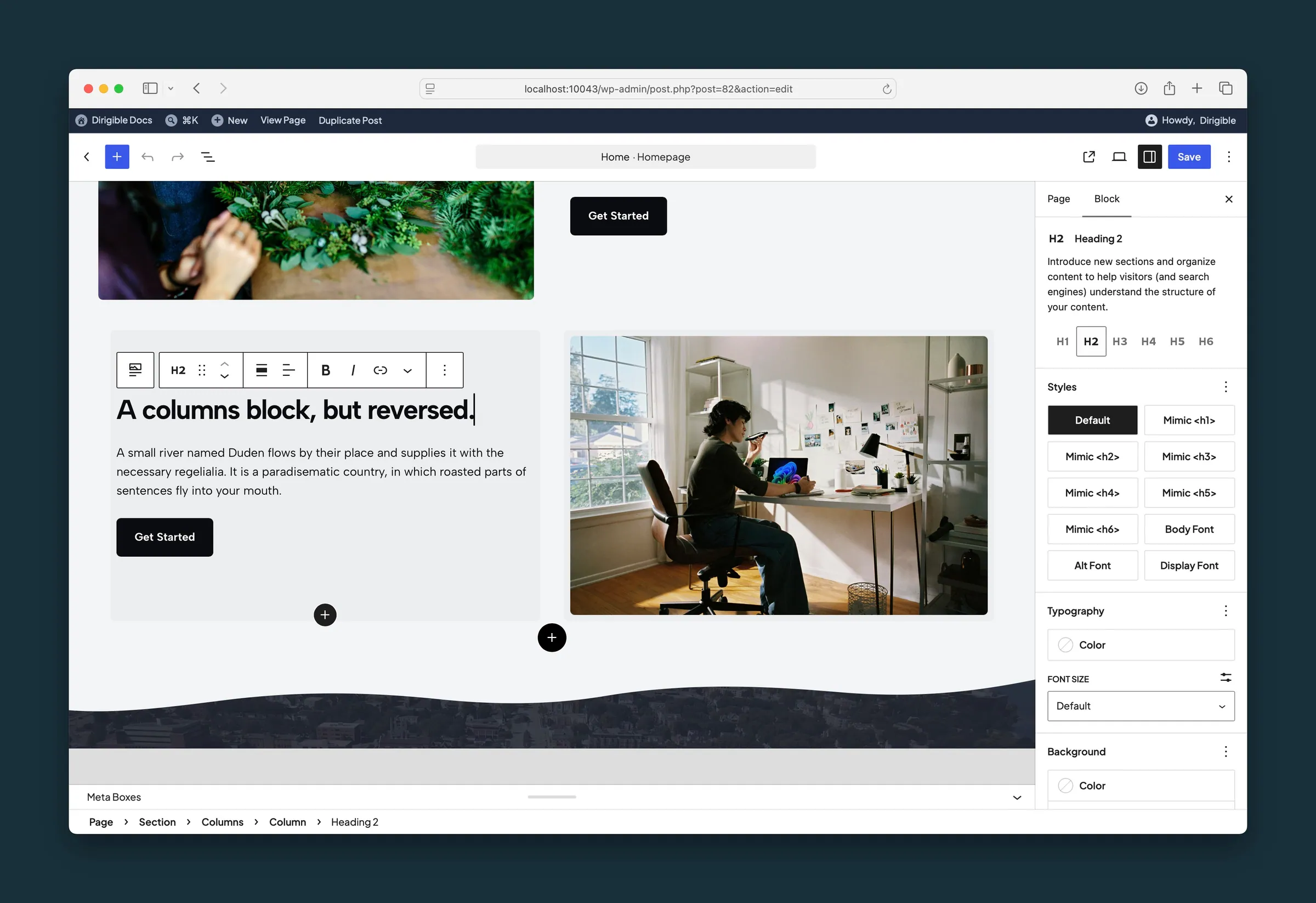
Edit pages on a canvas that looks like the live site, with the same fonts, colors, buttons, and spacing, so you spend less time switching between the editor and Preview.
Where to find it
- Any page or post you open in the block editor.
- The editing canvas in the center shows your site's styles. The sidebar and toolbar keep the standard WordPress look so the controls stay easy to read.
How to use it
- Open a page or post in the block editor as usual.
- Build with Dirigible blocks. Text, buttons, and widths match your Customizer choices with no extra setup.
- Use the preview options in the editor toolbar to check tablet and mobile layouts.
- When in doubt, click Preview or view the published page. The editor is close to the live site but not identical for every block.
What happens automatically
- The editor loads the same styles as the live site, applied only to the editing canvas.
- Your site colors, fonts, and text sizes carry into the editor, so headings and paragraphs look the way they will on the page.
- Fonts from Dirigible Fonts load in the editor just as they do on the site.
- Google Fonts, Adobe Fonts (Typekit), and other fonts from Scripts & Embeds → Embed Fonts also load in the editor.
- Additional CSS from the Customizer applies inside the editor where it matches the block markup.
- Block insert buttons and column hover outlines are styled to keep the layout from jumping while you edit.
Things to know
- Some things only run on the live site: sticky headers, scroll animations, and some third-party scripts.
- Additional CSS written for the live page may not show in the editor if the block markup differs. Check the live page for important tweaks.
- WooCommerce admin screens don't use Dirigible editor styles. This feature covers pages and posts.
- Customizer style changes reach the editor after you publish them. You may need to reload an open editor tab.