

WooCommerce
What it helps you do
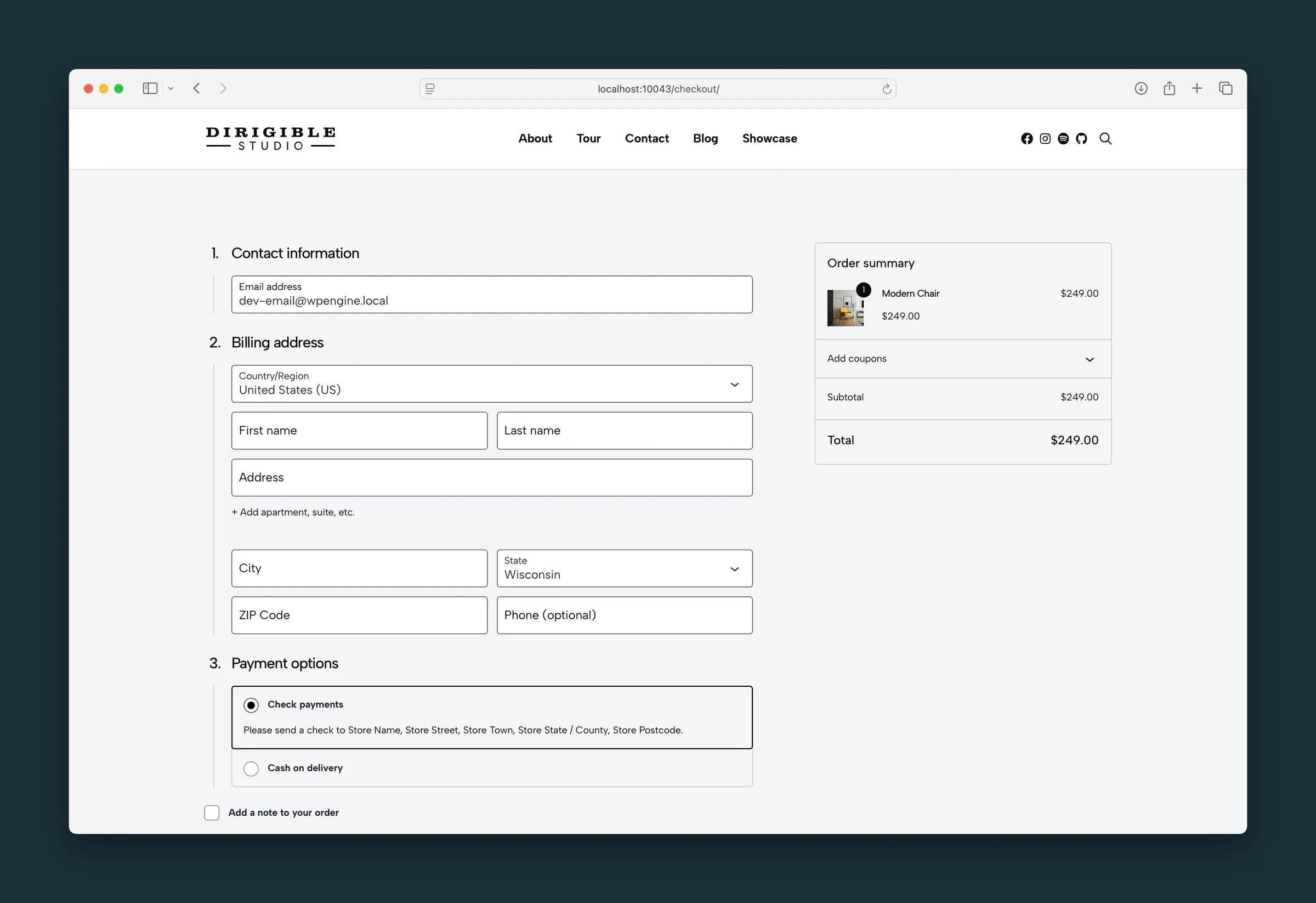
Run a WooCommerce store that looks like the rest of your Dirigible site. Shop grids, product pages, cart, checkout, and My Account inherit your palette, buttons, and forms — including WooCommerce’s block cart and block checkout, not only the classic shortcode pages.
Where to find it
- Plugins — install and activate WooCommerce (and any payment or shipping extensions you need).
- Appearance → Customize → Store
- Product Catalog — shop layout, product card titles, image fit, excerpts, and quick add-to-cart.
- Product Pages — quantity spinner and image captions.
- WooCommerce → Settings — store address, payments, shipping, tax, and account options (owned by WooCommerce).
- Pages — Cart, Checkout, Shop, and My Account pages created by WooCommerce; edit Cart and Checkout in the block editor when you use the block templates.
The Store panel appears only while WooCommerce is active.
How to use it
- Activate WooCommerce and finish its setup checklist (currency, pages, and payments).
- Open Customize → Store → Product Catalog to set Layout, Image Sizing, Product Card Title, and whether shop tiles show Excerpts or an Enable Cart Button quick-add badge.
- Open Product Pages to toggle the Quantity Spinner and Show Image Captions.
- Edit the Cart and Checkout pages. Keep (or insert) the WooCommerce Cart and Checkout blocks so shoppers get the modern block experience — Dirigible styles those blocks to match your theme.
- Add products, assign categories, set featured images, then preview the shop, a product, cart, and checkout on mobile and desktop.
- Optionally place a Mini Cart block in the header or a page so visitors can review the cart without leaving the page.
Use Styles → Buttons and Styles → Forms if purchase buttons or checkout fields need brand polish.
What happens automatically
- Shop, category, product, cart, checkout, thank-you, login, and My Account screens load Dirigible store styles so colors, type, and spacing match the rest of the site.
- Block cart and block checkout pages get theme-tuned layouts for line items, totals, coupons, and shipping choices.
- The Mini Cart drawer and store notices use the same visual language sitewide.
- Product cards in the shop and in WooCommerce product blocks share the same card treatment; simple in-stock products can show a quick-add badge when that catalog option is on.
- Single products use Dirigible’s product image viewer, sale badges, breadcrumbs in the product summary, and a related-products row (three products) under the main buy area.
- Common WooCommerce extensions (Bookings, Product Add-Ons, Local Pickup Plus, Subscriptions, gift cards, and popular payment gateways) receive matching styles when those plugins are active on the pages that need them.
Things to know
- Variable products and most complex product types still open the product page to choose options — quick add-to-cart on the shop grid is for simple products only.
- Classic (shortcode) cart and checkout still work; the block versions are fully supported and are what new WooCommerce installs typically use.
- Shopping Cart under Product Catalog sets the Cart / Bag / Basket label used with the header mini-cart icon.
- Payments, tax, shipping zones, and email templates are set up in WooCommerce itself. Dirigible styles the pages your customers see.
- Purchase tracking (Google Analytics / Tag Manager ecommerce) lives under Scripts & Embeds → Analytics & Tracking when you enable enhanced ecommerce there.