

Analytics & Tracking
Usage
Open Appearance → Customize → Scripts & Embeds → Analytics & Tracking and paste IDs only for the services you use: Google Analytics, Google Tag Manager, Facebook Pixel, LinkedIn, StackAdapt, Hotjar, HubSpot, and Piwik PRO, plus the Google and Facebook verification fields if those platforms ask for them. Leave the rest blank.
You can paste either the ID or the whole code snippet the service gives you: Dirigible keeps just the ID, and the field shows it after you click Publish. If a field shows a red message, the value isn't in that service's format (each field's description says what it looks like), and Publish waits until you fix or clear it. Each field takes one ID, so if what you paste has several (a Google tag that loads both a G- and an AW- ID, for example), the message lists them and you paste just the one that field is for. Old Universal Analytics IDs (UA-…) stopped working in 2024, so Google Analytics ID asks for your GA4 Measurement ID (G-…) instead.
For HubSpot, enter the HubSpot Portal ID (your Hub ID) and set HubSpot Region to EU if your HubSpot tracking code loads from js-eu1.hs-scripts.com. For Piwik PRO, enter both the Piwik PRO Account Address and the Piwik PRO Container ID; tracking stays off until both are filled in.
Tracking Load Strategy sets when tracking starts: After Page Load (the default) or First Interaction (the visitor's first click or scroll). Your own visits while logged in as an admin aren't tracked unless you turn on Track Admin Sessions, which is meant for testing.
With WooCommerce active, Enhanced Ecommerce Tracking sends completed purchases to Google Analytics or Tag Manager. Ecommerce Debug Mode shows those events in the browser console, for testing only.
When to use it
- Launching a new site and connecting Google Analytics and marketing tags in one place.
- Speeding up the first page load by waiting for the visitor's first interaction.
- Tracking shop revenue from WooCommerce orders.
Tips
- Turn on the GDPR Banner if tracking should wait for visitor consent.
- You don't need both a Google Analytics ID and a Tag Manager ID unless your setup calls for it. Follow your analytics team's plan.
- Moving HubSpot or Piwik PRO from pasted code to these fields? Remove the old code from Custom Embeds in the same Publish, or every visit is counted twice. The account and its reports carry on as before. Unlike pasted code, these fields wait for consent when the GDPR Banner is on.
- Turn off Track Admin Sessions on the live site so reports show real visitors only.
- Google Site Verification ID takes more than one code, one per line. Paste the meta tag from Search Console or just the code inside it.
- After publishing, check in a private window with your provider's debugger that tags are firing.
Settings
Analytics & Tracking
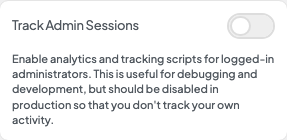
Enable analytics and tracking scripts for logged-in administrators. This is useful for debugging and development, but should be disabled in production so that you don't track your own activity.
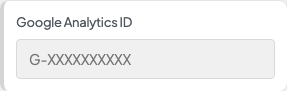
Starts with G-, like G-XXXXXXXXXX (a GT- or AW- Google tag ID also works). You can paste the whole Google tag code. Not used when a Google Tag Manager ID is filled in.

Starts with GTM-, like GTM-XXXXXXX. You can paste the whole Tag Manager code.
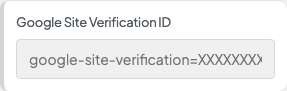
From Google Search Console's HTML tag method: paste the meta tag, or just the code from content="…". For more than one code, put each on its own line.
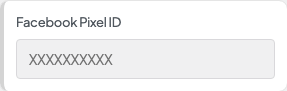
A 15 or 16 digit number from Meta Events Manager. You can paste the whole pixel code.
From Meta Business Settings → Brand Safety → Domains (meta tag method): paste the meta tag, or just the code from content="…" (about 30 lowercase letters and numbers).
A number, like 1234567, from your Insight Tag in LinkedIn Campaign Manager. You can paste the whole Insight Tag code.
Your Universal Pixel ID: the code inside saq('ts', '…') in your StackAdapt pixel, about 22 letters, numbers and dashes. Capitals matter. You can paste the whole pixel code.
Your Hotjar Site ID, a number (hjid in the tracking code). You can paste the whole tracking code.
Your HubSpot Hub ID: the number in your HubSpot tracking code, as in js.hs-scripts.com/1234567.js. You can paste the whole tracking code. When you fill this in, remove the old pasted HubSpot code from Custom Embeds, or visits are counted twice. The HubSpot account and its history stay the same.
Where your HubSpot account is hosted. Choose EU if your tracking code loads from js-eu1.hs-scripts.com.
Your Piwik PRO account name, or its full address (example.piwik.pro or example.containers.piwik.pro). When you fill in this and the Container ID, remove the old pasted Piwik PRO code from Custom Embeds, or visits are counted twice. The Piwik PRO account and its history stay the same.
The site's container ID from Piwik PRO: Administration → Sites & apps → Installation. It looks like 1a2b3c4d-1234-5678-9abc-1a2b3c4d5e6f. You can paste the whole container code.
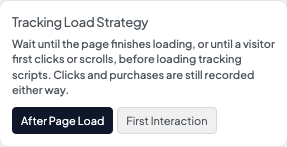
Wait until the page finishes loading, or until a visitor first clicks or scrolls, before loading tracking scripts. Clicks and purchases are still recorded either way.
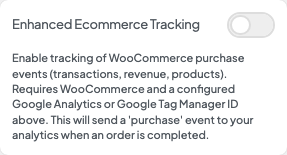
Enable tracking of WooCommerce purchase events (transactions, revenue, products). Requires WooCommerce and a configured Google Analytics or Google Tag Manager ID above. This will send a 'purchase' event to your analytics when an order is completed.
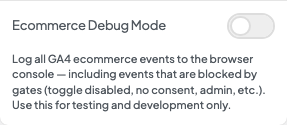
Log all GA4 ecommerce events to the browser console — including events that are blocked by gates (toggle disabled, no consent, admin, etc.). Use this for testing and development only.